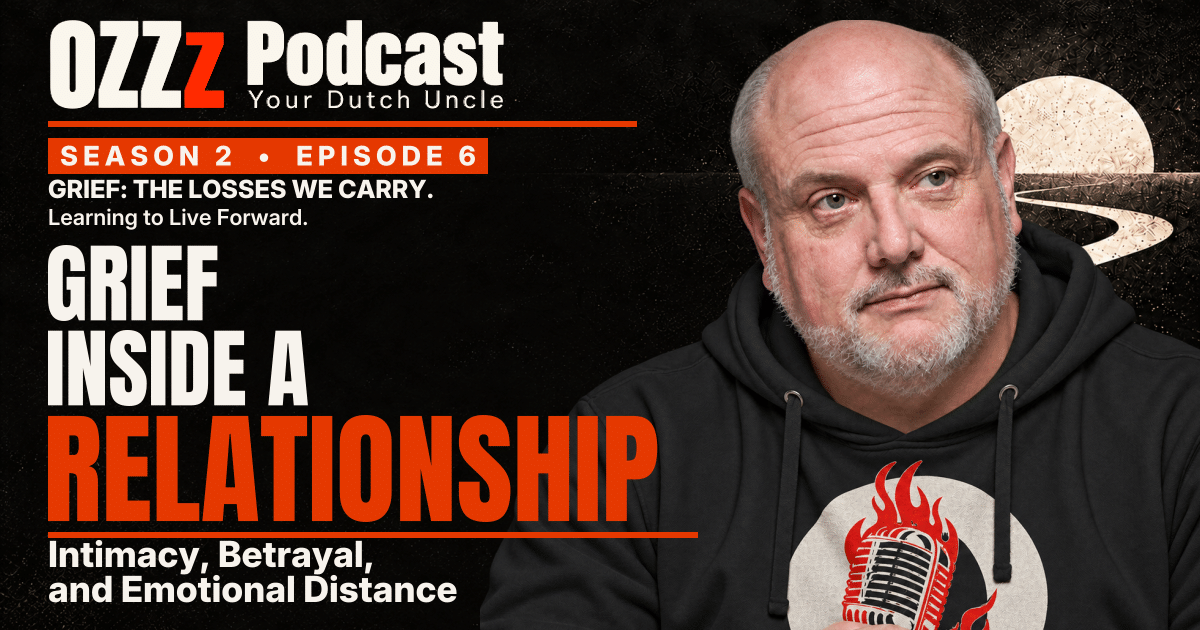
Episode Summary: In Season 2, Episode 6 of the OZZz Podcast, Hoomes explores relationship grief that can happen when emotional closeness, affection, intimacy, trust, companionship, or shared expectations change while the relationship itself continues. He talks about loneliness inside a partnership, intimacy beyond sex, feeling wanted, communication, betrayal, forgiveness, rebuilding trust, boundaries, identity, long-term relationship changes, illness, aging, caregiving, and the difficult decisions people sometimes face when they realize something important between them has changed. Throughout the conversation, Hoomes makes room for different experiences without telling listeners whether they should stay, leave, reconcile, or rebuild.
Grief Inside a Relationship: Intimacy, Betrayal, and Emotional Distance
Season 2, Episode 6
This blog only touches the surface of the conversation.
In the full episode, Hoomes talks more openly about loneliness inside relationships, intimacy, rejection, betrayal, forgiveness, boundaries, long-term partnerships, identity, family experience, and the uncomfortable questions people sometimes avoid asking.
And yes...
There is a Kenny Rogers moment. 😂
Listen to Episode 6 for the full conversation.
Can You Feel Lonely While Still in a Relationship?
Being physically near someone does not always mean feeling emotionally connected to them.
A couple may still live together, manage a household, raise children, pay bills, and go through familiar routines while feeling increasingly distant.
Sometimes that distance happens after a specific event.
Other times, it develops slowly.
Conversations become more practical.
Affection changes.
People stop sharing the parts of themselves they once shared freely.
Hoomes explores that difference in the full episode and asks listeners to consider whether they are simply living together or still growing together.
When Intimacy Changes
Intimacy is not limited to sex.
For many people, closeness may also include affection, touch, tenderness, companionship, reassurance, and feeling wanted.
When those things change, people may begin questioning themselves or the relationship.
But a change in intimacy does not always have one explanation.
Health, aging, medication, stress, caregiving, emotional distance, conflict, and other life circumstances can all affect relationships differently.
One of Hoomes' important reminders in this episode is that a familiar form of intimacy can change without automatically meaning that love has disappeared.
The deeper conversation is in the episode.
When Trust Changes the Story You Thought You Knew
Betrayal can affect more than trust in another person.
It may cause someone to question memories, assumptions, expectations, and even their own judgment.
What was real?
What changed?
What did I miss?
What happens now?
Hoomes explores the difference between an apology and actual change, as well as the important distinction between forgiveness, reconciliation, and rebuilding trust.
Those decisions do not always happen together.
And they do not have the same meaning for every relationship.
What Happens to You Inside a Long Relationship?
Relationships can become deeply connected to identity.
Over time, someone may think of themselves primarily as a spouse, partner, parent, caregiver, or part of a couple.
When the relationship changes, another question can surface:
Who am I outside of this role?
In Episode 6, Hoomes brings a personal family story into this part of the conversation and reflects on the importance of maintaining some sense of identity, relationships, interests, awareness, and purpose beyond a romantic partnership.
You'll have to listen to the episode for that story.
Reflection Question
Have you ever grieved something inside a relationship that technically still existed?
Maybe the person was still there, but something changed.
Affection.
Trust.
Intimacy.
Communication.
Friendship.
Companionship.
A future you once imagined.
What did you miss?
Were you able to talk about it?
And what did you eventually learn about yourself or the relationship?
Season Two Recommended Reading
Throughout Season 2, Hoomes recommends two resources for listeners who want to continue thinking about grief and the different kinds of loss people carry:
Grief Is a Journey: Finding Your Path Through Loss by Kenneth J. Doka, PhD
This book explores how differently people experience grief and recognizes forms of loss that other people do not always understand or acknowledge.
The Wild Edge of Sorrow: Rituals of Renewal and the Sacred Work of Grief by Francis Weller
This book takes a broader look at sorrow, meaning, relationships, life changes, and the grief people may carry privately.
These books are offered as resources, not instructions for how anyone is supposed to grieve.
Take what helps.
Leave what does not.
Amazon Affiliate links are provided above. OZZz Podcast may receive a small commission from qualifying purchases at no additional cost to you.
Frequently Asked Questions
Can you grieve a relationship that has not ended?
Yes. Some people experience grief when something meaningful inside a relationship changes or is lost even though the relationship itself continues. That may include emotional connection, trust, affection, intimacy, companionship, or expectations about the future.
Can emotional loneliness happen while living with a partner?
Yes. Emotional loneliness can happen when someone feels unseen, unheard, unsupported, or disconnected even while sharing daily life with another person.
Does a change in intimacy always mean the relationship is ending?
No. Intimacy can change for many reasons, including health, aging, stress, medication, caregiving, relationship dynamics, or personal circumstances. The meaning of that change depends on the people and situation involved.
Is forgiveness the same as reconciliation?
No. Forgiveness, reconciliation, and rebuilding trust are separate decisions. Someone may forgive without remaining in the relationship, and reconciliation does not automatically restore trust.
Ask OZZz
Has something important changed inside your relationship?
Are you struggling with emotional distance, trust, intimacy, or communication?
Do you have a question you wish you could ask without being judged?
Send your question to Hoomes through Ask OZZz
The question you are carrying may be the same one somebody else has been afraid to ask.
Continue the Conversation
The podcast is only one part of the OZZz community.
Through the website, you can:
- Submit an Ask OZZz question
- Learn about the Featured Artist Spotlight
- Explore OZZz brand apparel
- Discover podcast sponsorship opportunities
- Join the monthly newsletter
Follow Season 2 as Hoomes continues exploring the many forms of grief people carry.
Final Thoughts
Sometimes grief is easy to recognize because something clearly ended.
Other times, the person is still there.
The relationship still has a name.
The routines continue.
But something important feels different.
Recognizing that change does not automatically mean a relationship should end.
It also does not guarantee that the relationship can or should return to what it was before.
Sometimes the first step is simply being willing to tell the truth about what has changed.
As Hoomes reminds listeners:
A relationship does not have to end for someone to experience loss inside it.
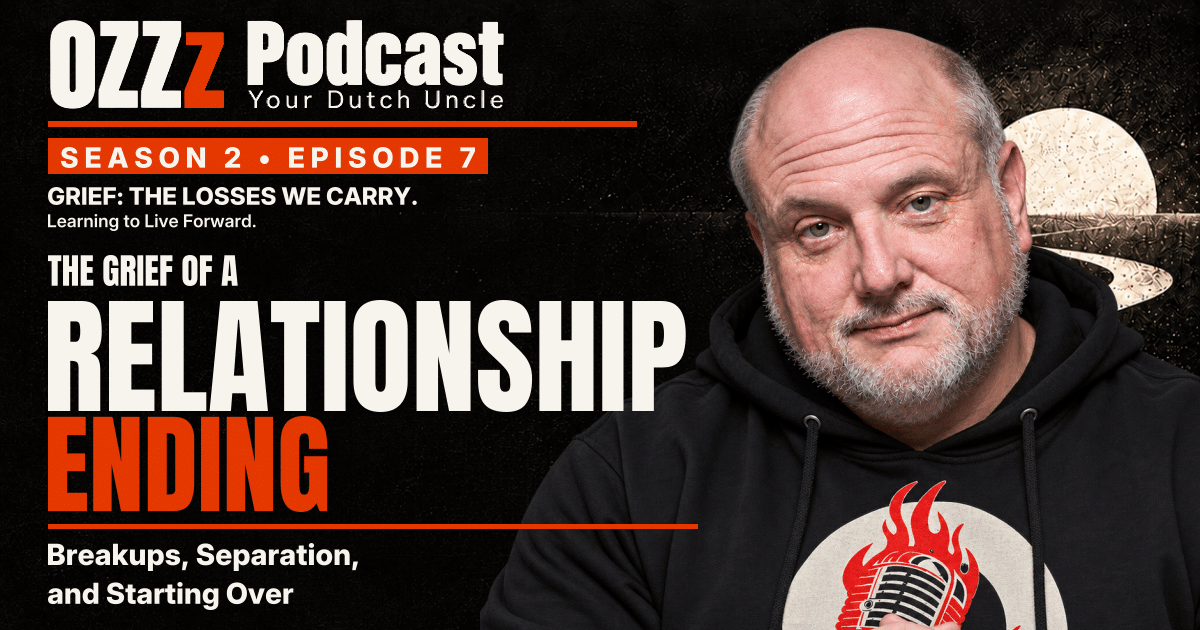
Coming Next Week
Episode 7
The Grief of a Relationship Ending
Breakups, Separation, and Starting Over
Next week, Hoomes turns from grief inside a relationship to what happens when a meaningful relationship actually ends.
Reflection Question:
When a relationship ended, what did you lose besides the person?
Closing Thought:
Sometimes the hardest part of an ending is grieving everything you thought would come next.
About the OZZz Podcast
Hosted by Hoomes OZZz, Your Dutch Uncle, the OZZz Podcast features honest conversations about life, family, relationships, grief, healing, personal growth, and the experiences people do not always know how to talk about.
Season 2, Grief: The Losses We Carry. Learning to Live Forward, explores the many forms grief can take and the experiences people often carry quietly.
Important Note
The OZZz Podcast is intended for conversation, reflection, education, and entertainment. It is not a substitute for qualified medical, mental-health, legal, or financial guidance.
Changes in intimacy or relationship dynamics can sometimes involve health, medication, stress, pain, mental health, caregiving, or other individual circumstances. If you have concerns about your physical or emotional well-being, consider speaking with an appropriately qualified professional.
If a relationship involves violence, threats, intimidation, coercion, stalking, or abuse, ordinary relationship advice may not fit the situation. Individual safety and qualified support may need to come first.